What exactly should the Paralympics be 'inspiring'?
- jamiethomasgreen94
- Aug 28, 2021
- 3 min read
Updated: Mar 4, 2022
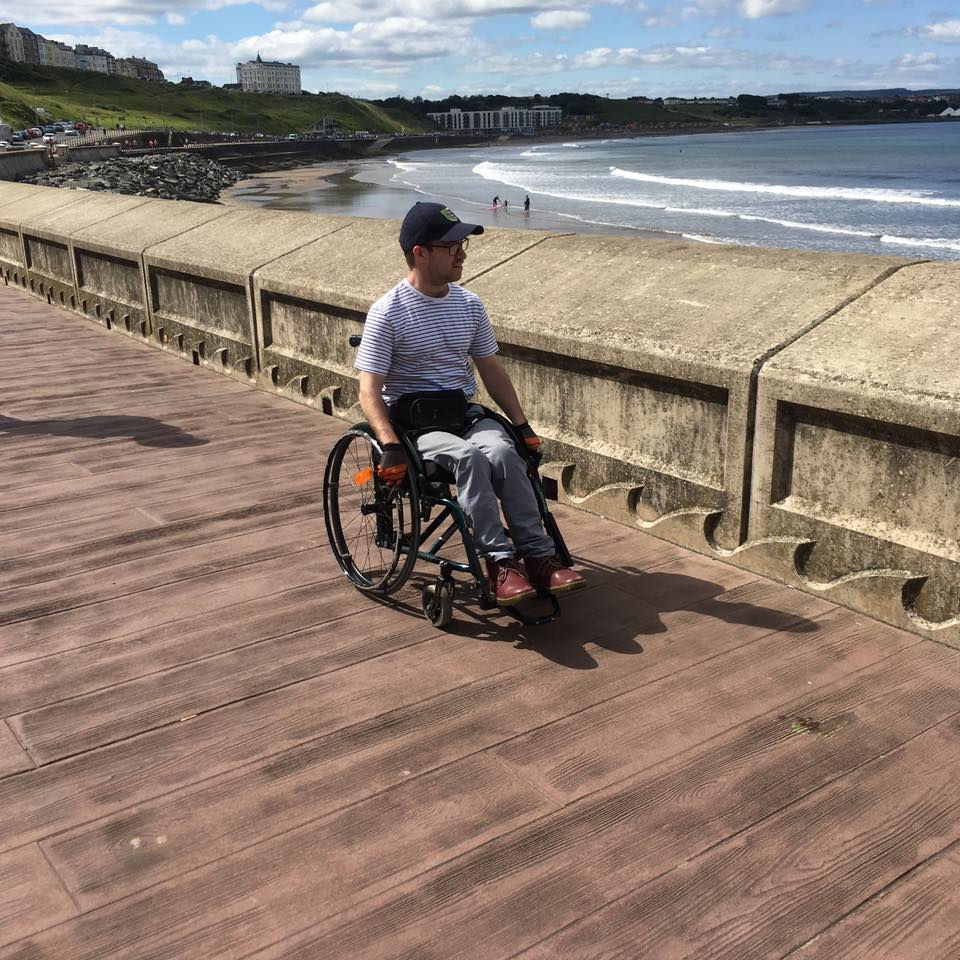
As I was walking, or rather wheeling, into town a little while ago, a complete stranger cheerfully commented: "It’s nice to see you out and about!" A bit later, someone else helpfully started making a huge ‘vehicle reversing’ noise as I was carefully navigating my way out of a local department store. Quite apart from the fact that having cerebral palsy means I have an over-developed startle reflex, it goes without saying that this intervention wasn’t especially helpful. Not to be outdone, yet another stranger asked me if I was ‘already in training for the next Paralympics’, seemingly thinking that the route to WH Smith was my equivalent of an elite athletics track.
In isolation, each of these incidents is relatively unremarkable: I’ve got so many similar stories that I don’t really dwell on each individual encounter too much. Put them all together, however, and you start to get a snapshot of the skewed, and sometimes downright bizarre, way in which disabled people are often viewed by society. You’re either faced with crushingly low expectations, praised enthusiastically for being brave enough to go about your daily life without wallowing in self-pity. On the flip side, it’s often assumed that just through having a disability, you have also been imbued with some kind of superhuman ability to automatically compete at the Paralympics, as if every wheelchair user casually buying carrots at their local Asda is really the next Hannah Cockcroft or Jonnie Peacock.
Watching the Paralympics over the last few days has brought these contradictions to the front of my mind. I hear the word ‘inspiring’ mentioned a lot, and of course watching elite athletes perform at such a high level should be exactly that. But they should be an inspiration to the sporty disabled kid at school who is reticent about taking GCSE PE, or the child who has never seen anyone with their disability achieving highly at sport. The Paralympics shouldn’t turn into a sporting extension of those all too frequent viral clips on social media, which praise non-disabled children simply for being kind enough to share a table with their disabled classmate at lunch.
I actually think Channel 4 have done a really good job with their coverage of the Paralympics so far. Sporting excellence has been their main focus: they’ve mentioned the often challenging back stories of many athletes without letting them turn into a X Factor-style Saturday night sob story. Disabled presenters have also led much of the broadcasting. In particular, I was impressed with how things such as Ade Adepitan’s transfer from his taxi to his wheelchair were unobtrusively shown rather than being glossed over entirely.
In many ways, Channel 4’s approach encapsulates how the Paralympics, and all the coverage surrounding it, can act as a real force for good in terms of changing societal attitudes towards disability. There’s a danger that perceptions of disability can be too extreme, veering between pitying and patronising on the one hand to a sense of disabled people as ‘superhumans’ on the other. By showing something as mundane as getting out of a taxi, Channel Four have shown that there are pleasingly boring aspects of life as a disabled person, just as there are for everyone else. And if that makes a few people think before congratulating a wheelchair user for buying some orange juice from Sainsbury’s, then the Paralympics will have been inspiring for all the right reasons.


Comments